Sunday, October 5, 2014
This particular story starts a year ago, on a cold night in February 2013. I had recently acquired a classic Laserscope KTP/YAG system off of eBay, and I think we (my friend Peter and I) had just gotten the thing to turn on after disassembling it entirely for transport. We were browsing all the overpriced Laserscopes on eBay (the going price of a surplus KTP/YAG was sub-$1000 at the time, and there were a whole bunch of fancy new-model ones that were between $2-6K) when we noticed a couple things:
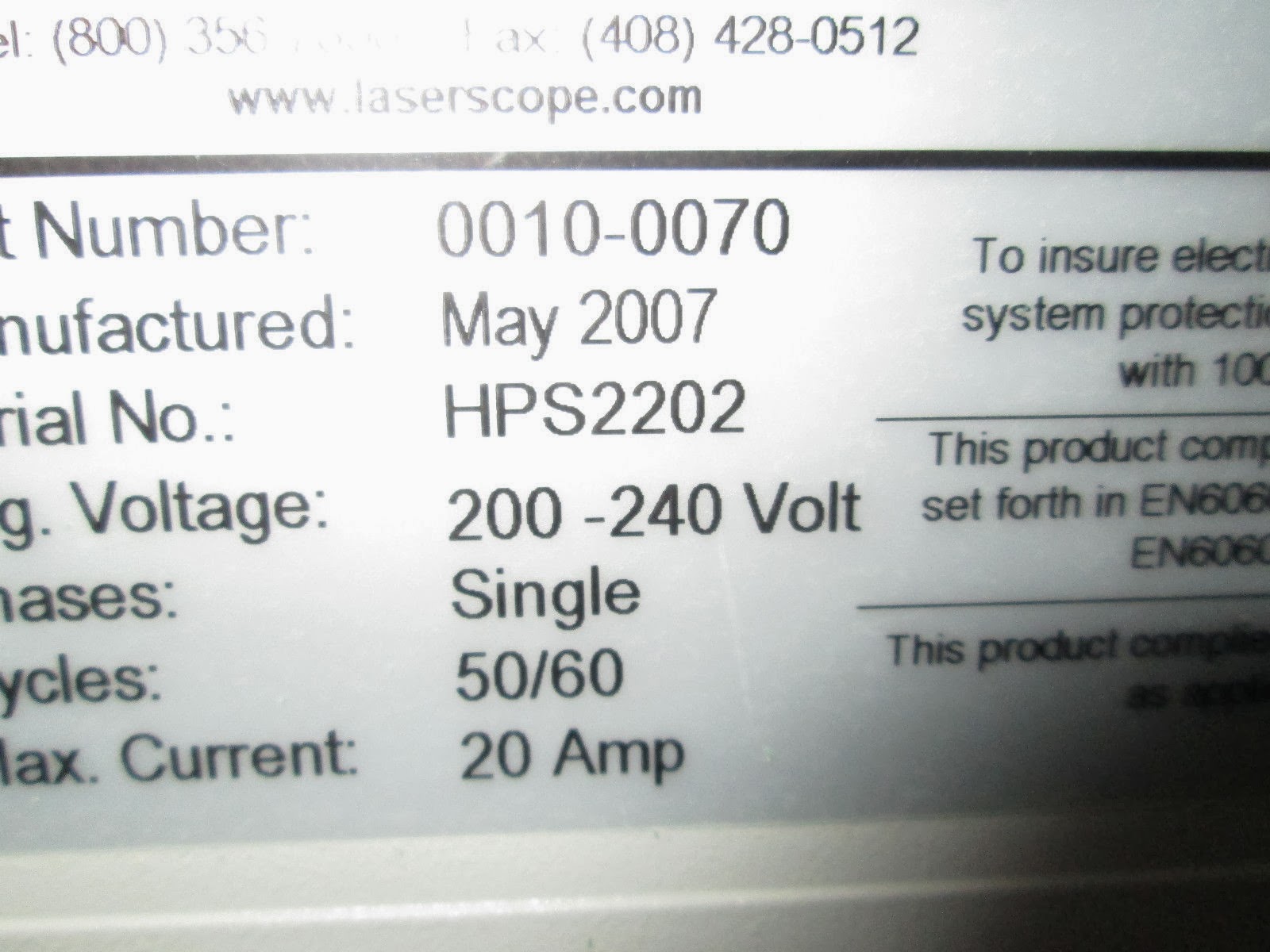
The latter was not too exciting; the Greenlight PV (which was known to the hobbyist community) was an 80W lamp-pumped system that pulled 50A@220V. Then we noticed the line requirement sticker on the back of the laser in one of the eBay listings:
See that? 120W of green out of a 20A 220V single phase outlet - 50% more power than the PV at under half the power draw. We had a hunch that this might be a DPSS laser, and fortunately, AMS's website quickly confirmed that.
We were lucky - there was a unit on eBay for $1800 that was throwing error 611. The very sparse operator's manual (intended for doctors and other end-users) indicated that error class 600 was a chiller error, so we figured that the chances that the laser was repairable was high. We also learned a few other things:
We figured that it was worth a shot nevertheless, after all, the most important part was the laser head, and interlocks or not a 120W head for $1800 was not bad. Also, how strong could the security be, anyway?
One week later...
The laser finally showed up, and the first thing to do, of course, was to pull off the covers and take a look at the innards. Peter and I had been both expecting gain modules side-pumped by a few hundred watts of diodes in the form of a couple dozen bars, such as in the Coherent Avia:
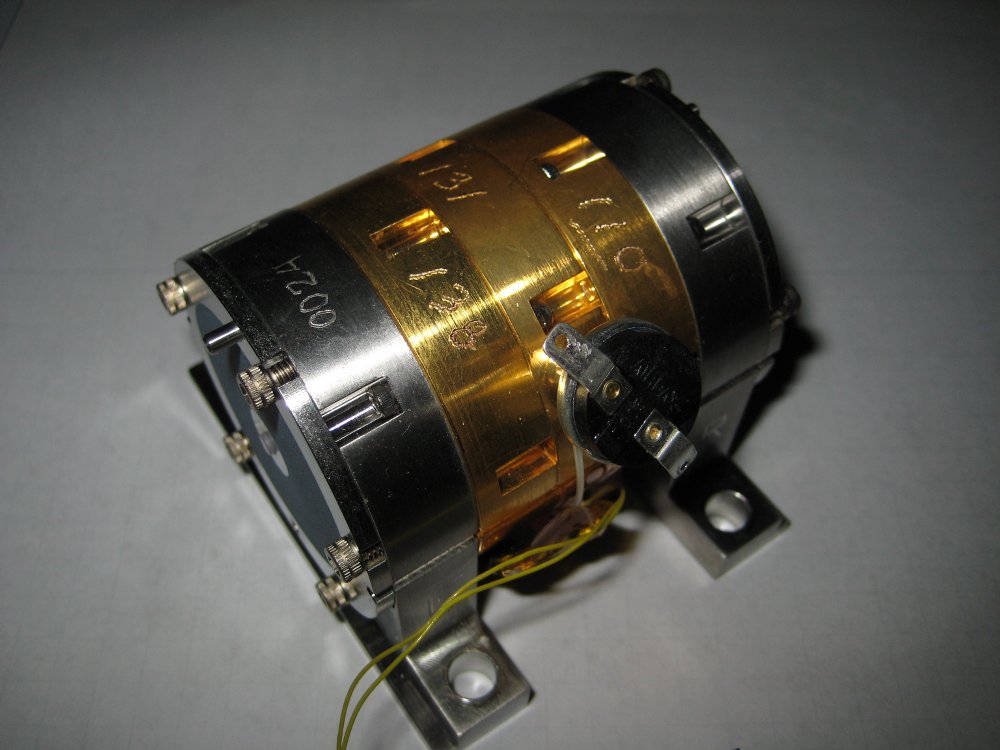
mmm donuts
Instead, we found this:
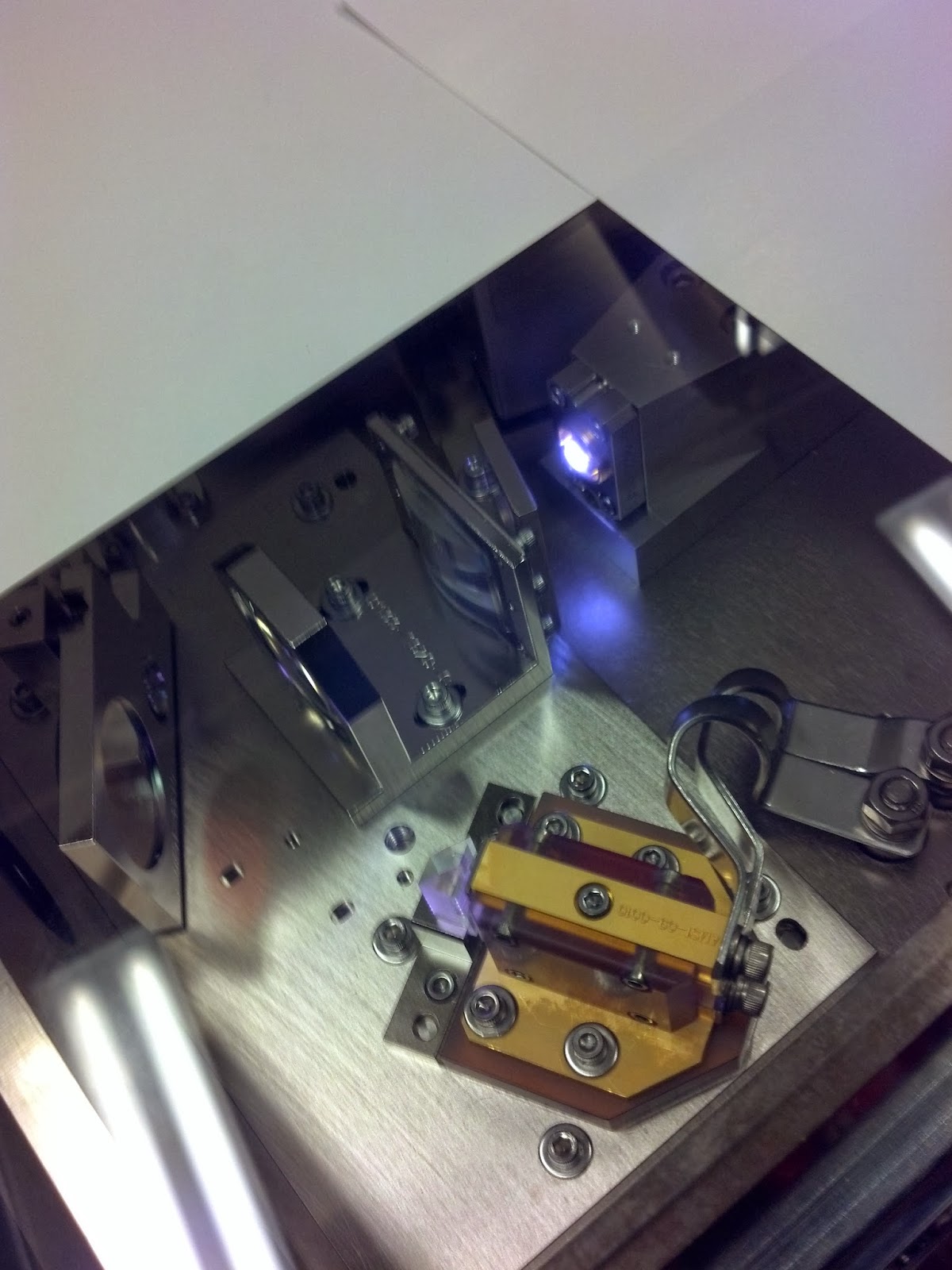
Evidently, Laserscope had chosen to use modern high-density microchannel modules and some sort of end-pumping scheme, the latter of which we didn't know was possible (uneven absorption down the length of the rod in high-power applications leads to thermal failures, and short rods neither have enough thermal dissipation nor gain to produce the necessary power). We later found a patent which documents the entire scheme.
The diode stack had micro-lenses on each bar, and a train of collimating optics consisting of some lenses and what appeared to be a lens duct focused the stack's output onto the end of the ~10mm YAG rod.
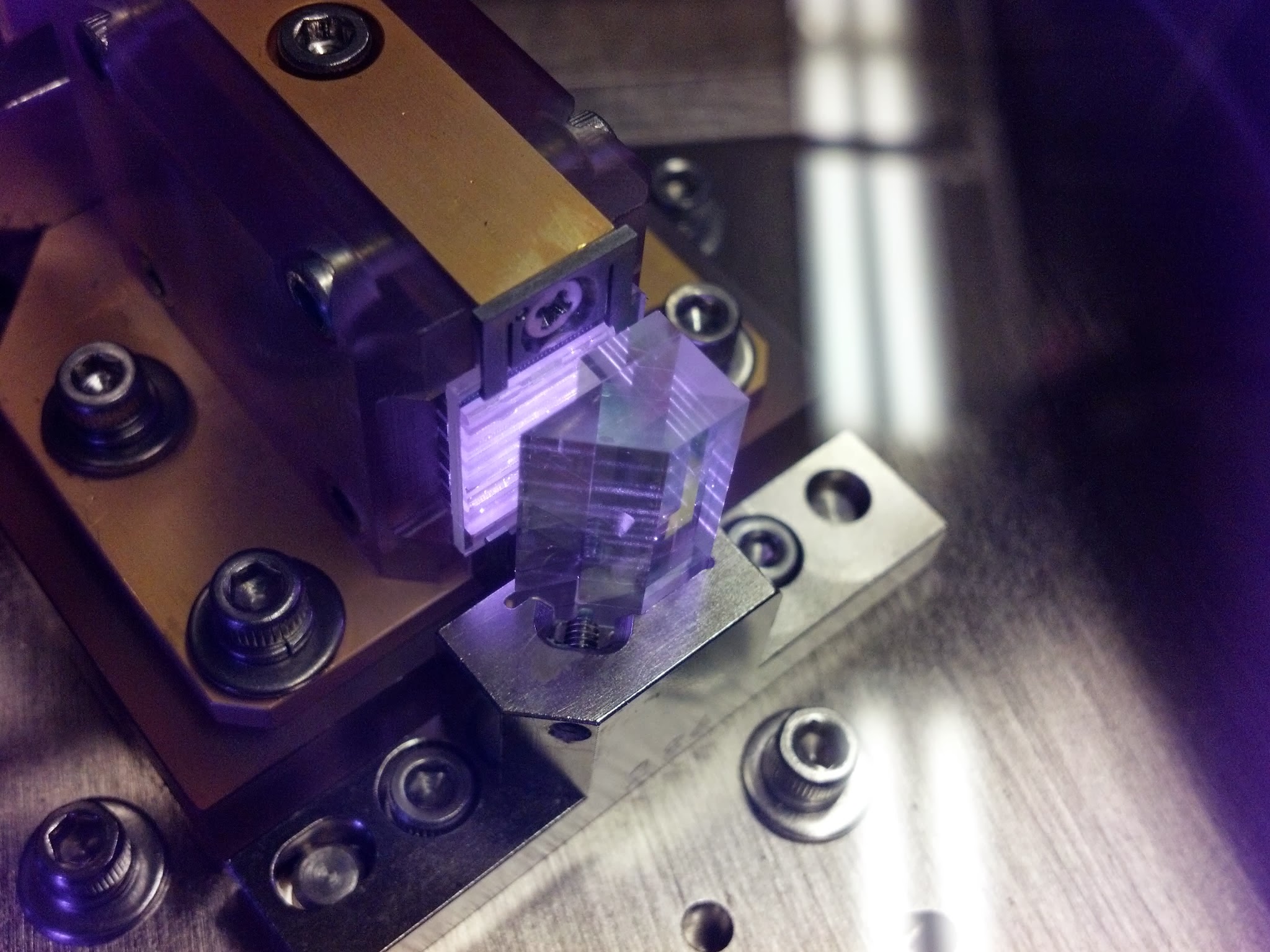
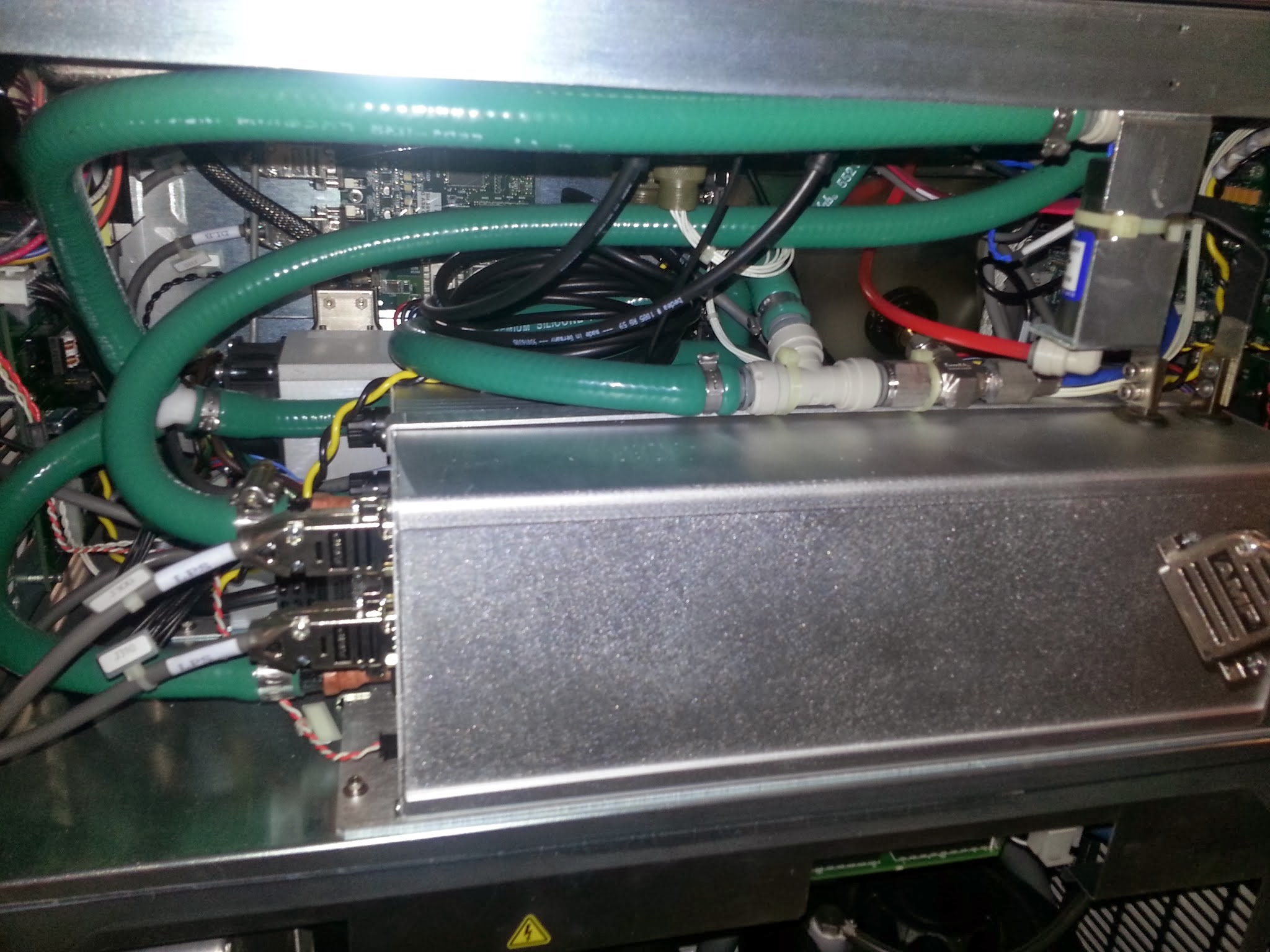
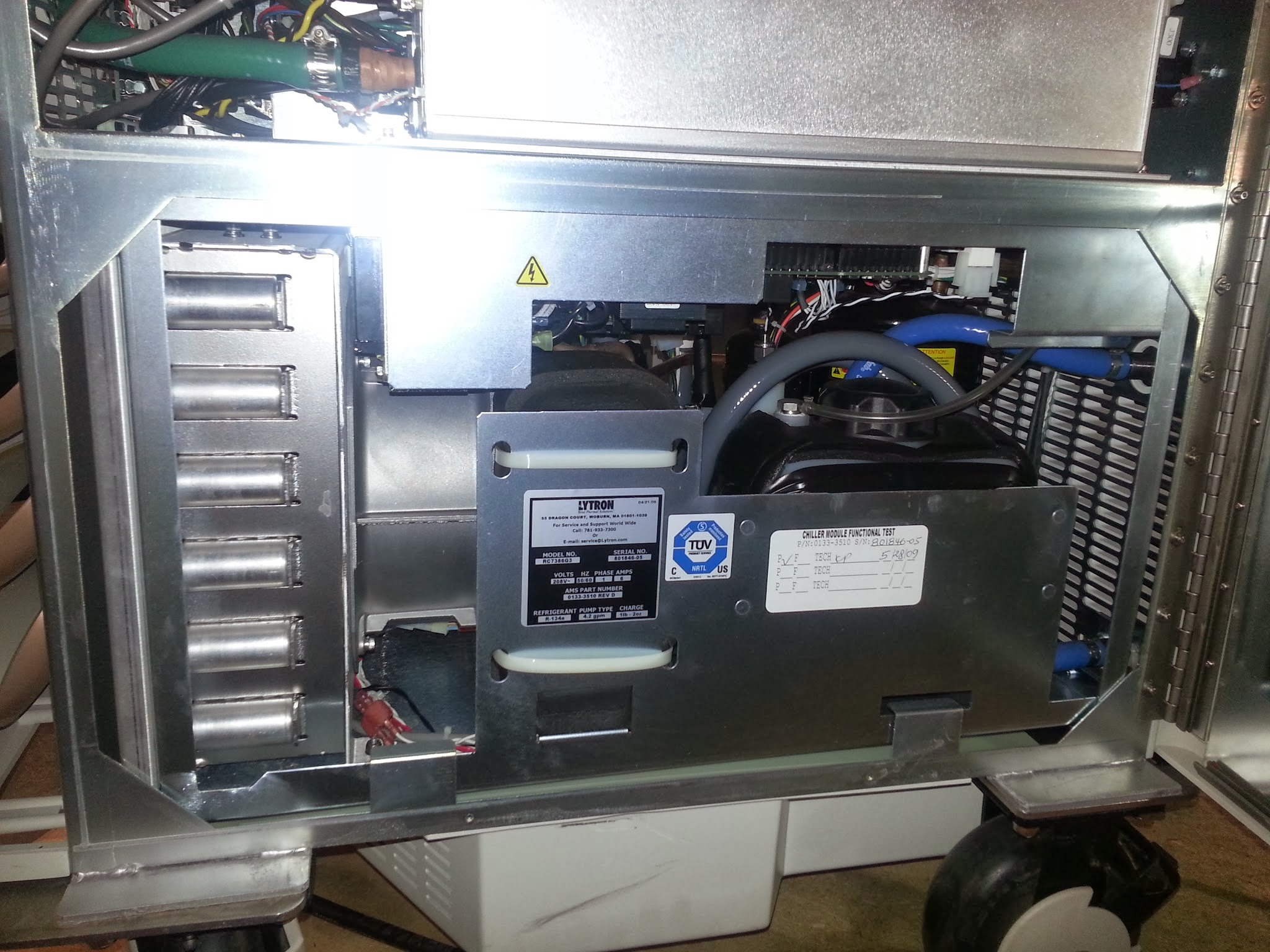
The laser also had a diode driver made by Vuemetrix and a Lytron recirculating chiller.
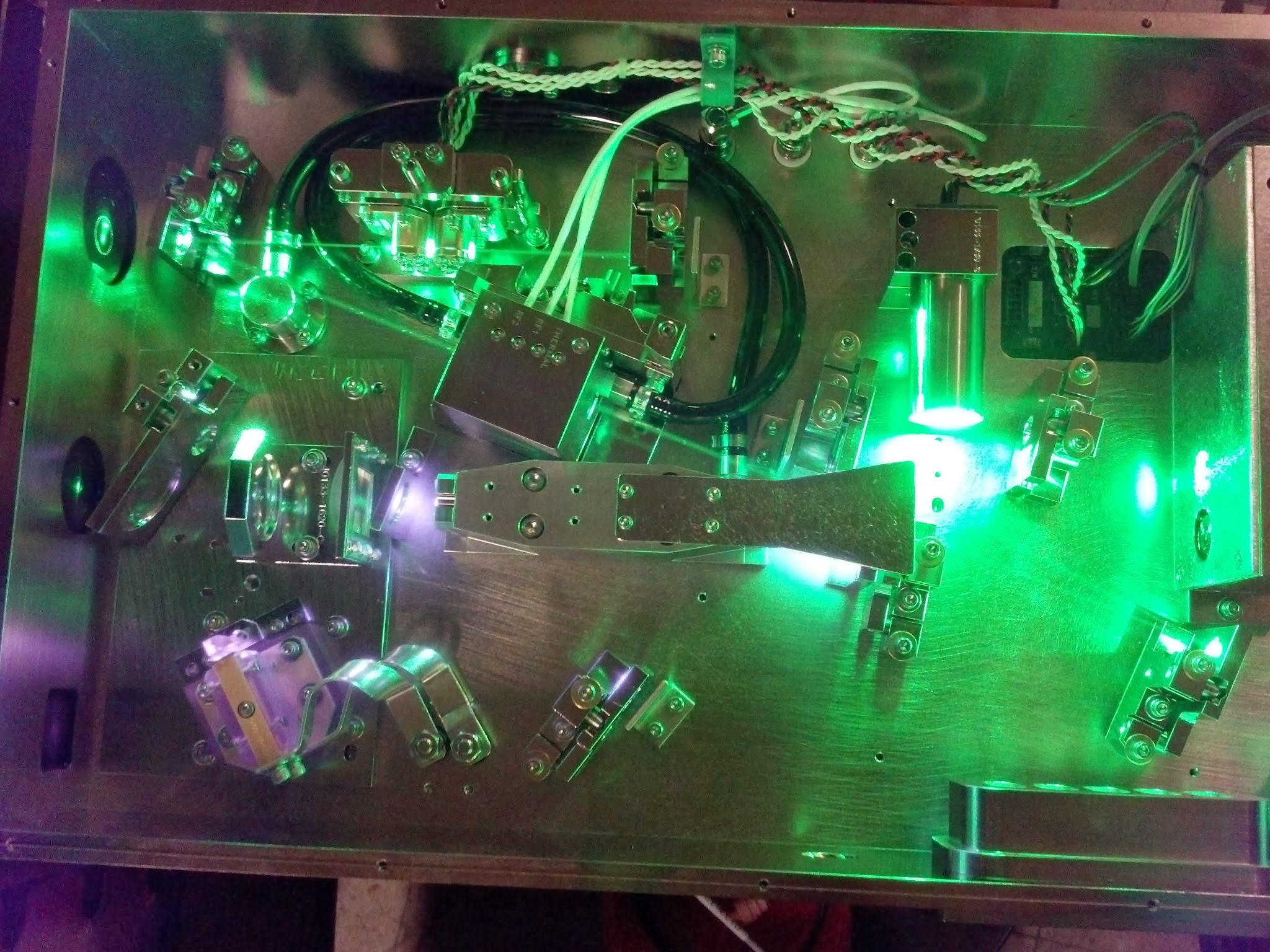
And last but not least, a cavity shot (note we had not gotten any power out at this point; this photo is merely illustrative since it shows the beam path nicely).